Walking safely with a prosthesis
How stappone insoles help build stability and confidence from the very first step
A smoother path from partial to full weight‑bearing
Adjusting to a new leg prosthesis is a defining moment in rehabilitation. One of the biggest hurdles is the shift from medically prescribed partial weight‑bearing to full weight‑bearing. stappone’s intelligent sensor insoles support this transition with a combination of precise load measurement, acoustic cues and real‑time visual feedback in the stappone app.
Users immediately see and hear whether they are loading their prosthesis correctly, helping them develop a realistic sense of everyday load far earlier in the process.
Regaining orientation when body awareness is missing
In the early days of prosthesis use, many patients struggle to understand what “20% load” actually feels like. The instruction is clear on paper, but nearly impossible to sense.
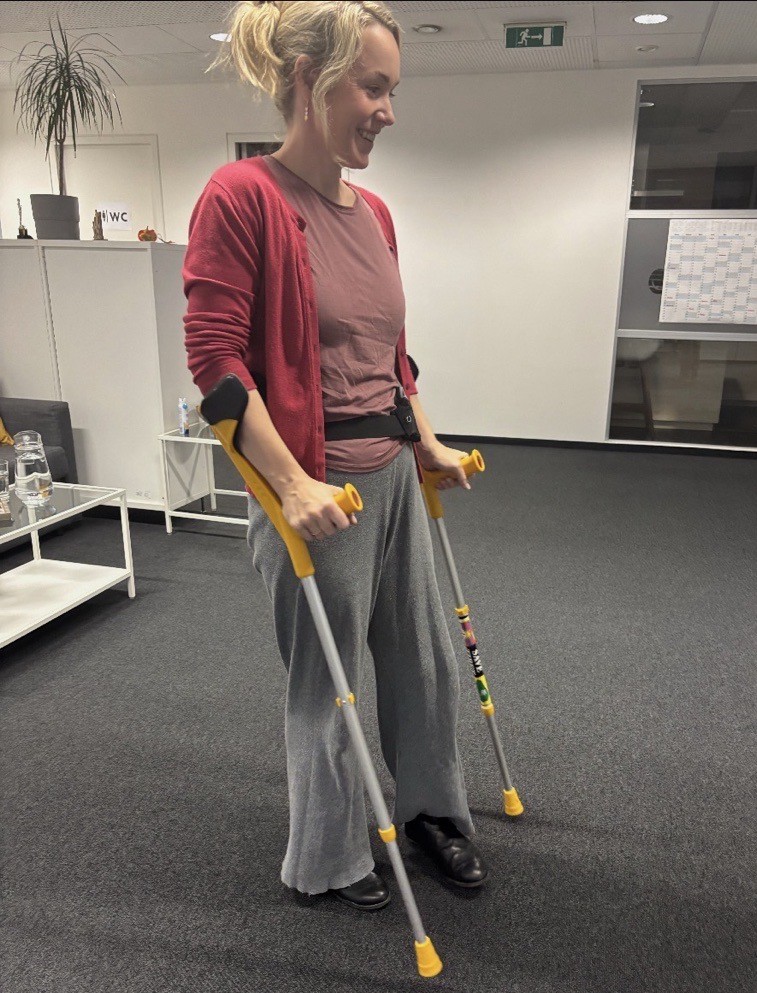
Ms. Ringhofer, who received her left‑leg prosthesis in early December, describes this challenge clearly: “Especially in the beginning, it was very helpful to develop a feeling for the load on the prosthesis, because you have no idea how many percent you’re actually putting on it.”
The sensor insoles turn this uncertainty into actionable guidance:
- Acoustic signals indicate over‑ or under‑loading.
- Real‑time visualizations in the app show the actual load with every step.
This combination makes progress transparent and helps patients learn more safely and confidently.
Building confidence step by step
As rehabilitation progresses, the allowed load typically increases week by week. For Mrs. Ringhofer, this was the phase where the insoles made the biggest difference:
- Each increase in allowed load brought more cnfidence in handling the prosthesis.
- Continuous feedback helped her apply the correct load more intuitively.
- The data showed increasingly stable values — a sign that a reliable sense of load was forming.
The insoles act as an objective guide, replacing guesswork with measurable clarity.
Reaching full weight‑bearing
The closer Ms. Ringhofer came to full weight‑bearing, the less she needed the insoles, not because they became less useful, but because the body awareness she had built remained. Her gait and load control became more confident, which is a key goal of any prosthesis fitting.
A practical bonus also stood out: “The battery was amazing. I used the insoles for four weeks in total and didn’t have to charge them once.”
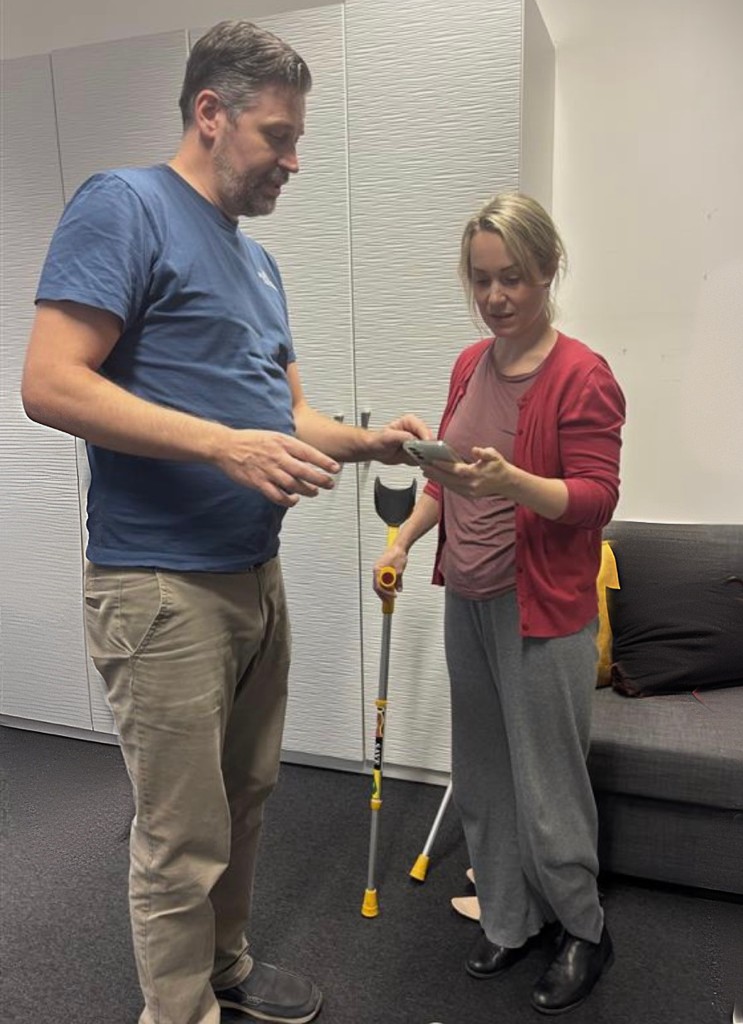
Peter Krimmer shows Ms. Ringhofer how to use the stappone app with ease.
Stronger together: Collaboration with OTN Implants
The partnership between stappone and OTN Implants strengthens the rehabilitation journey even further. Thomas Schneider, Area Manager DACH at OTN Implants, recently visited stappone in Vienna and expressed his enthusiasm: “The insoles are extremely helpful in the process from partial to full weight‑bearing,” he says, delighted that his patients benefit from this support.
Patients with OTN prostheses also receive a discount when renting the stappone insoles (information: rehab@stappone.at).
More safety, faster trust
Getting used to a prosthesis is a journey of learning, trust and gradual progress. stappone’s intelligent sensor insoles make this journey measurable and understandable, turning load into something patients can see, hear and feel.
“The result is faster body awareness, greater everyday safety and a structured path from the first cautious steps to confident full weight‑bearing”, which is a development that stappone CEO Peter Krimmer describes with great satisfaction.