How Accurate Are stappone Smart Insoles – What the Research Shows
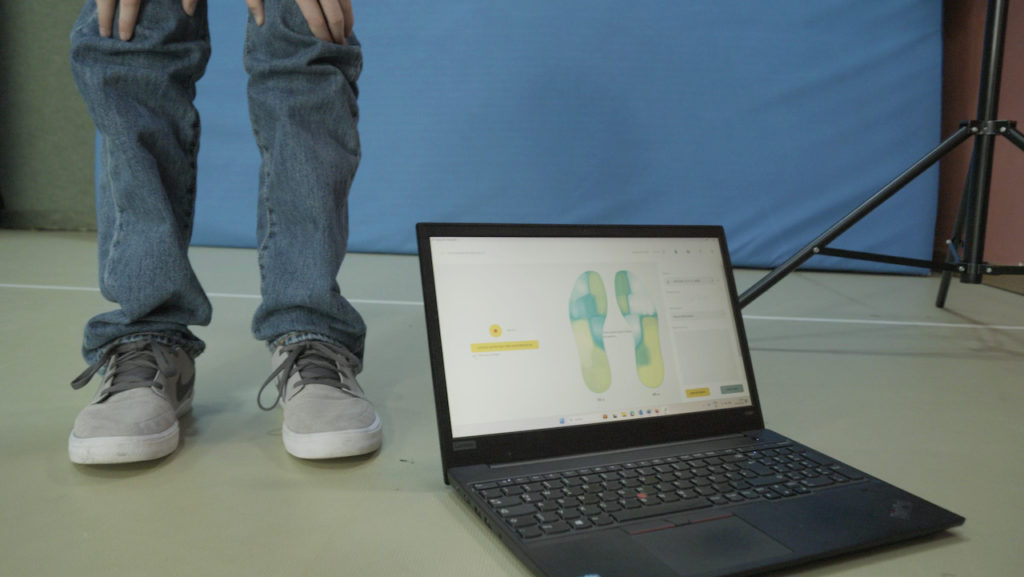
How accurate are stappone smart insoles, really? It’s a fair question, especially when the numbers on the screen are about your own recovery.
You’ve worked hard for every step. When your therapist shows you how you walk today, you want to know one thing: can I trust what I’m seeing?
The gold standard: the gait lab
The most precise way to measure walking is a gait lab. It’s a room with force plates built into the floor, cameras on every side and specialists who analyze every movement. The results are excellent.
But gait labs are rare, often booked out for weeks, and expensive. Many patients who would benefit from an objective gait analysis simply never get one.
That’s why stappone has put its insoles to the test against the lab itself. More than 13 external studies have looked at our sensor insoles, and 5 of them are peer-reviewed. Here’s what they found, in plain words.
1. They match the lab
In a study with the University of Applied Sciences St. Pölten, the force curves of our smart insoles tracked those of the lab’s force plates with an R² of 0.84.
R² runs from 0 to 1 and shows how closely the shape of one curve follows another: at 1, the two rise and fall in perfect step. At 0.84, the insole curves follow the lab’s curves closely. R² doesn’t show whether the force values themselves are identical; the error figures in the next study do.
2. They’re precise
In the “Mind the Steps” study, also with St. Pölten, 48 healthy adults walked across a lab force plate while wearing stappone. The insoles estimated the forces between foot and ground from their pressure and motion sensors. Compared with the force plate, the estimation error (normalized root mean square error, NRMSE; lower is better) was 3.95% for the forces pushing down, 3.81% for the forces moving forward and back, and 9.49% for the sideways forces.
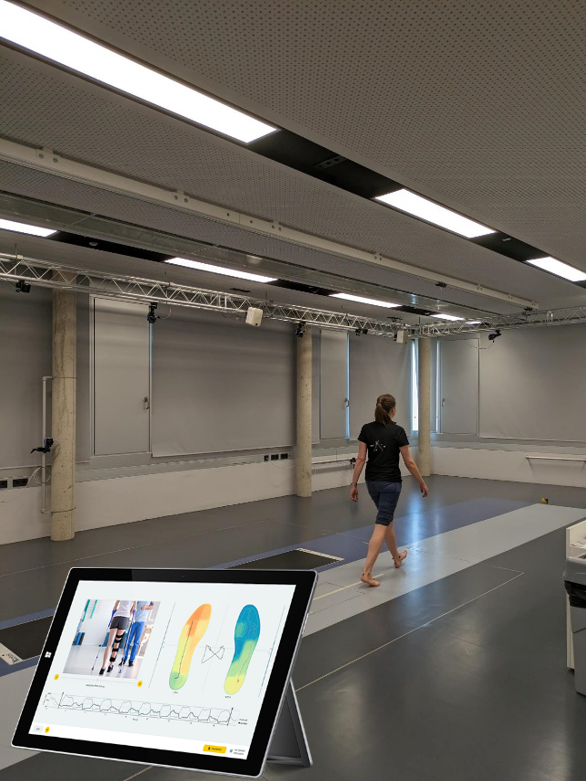
Caption: Measured side by side: stappone smart insoles on a lab force plate.
3. They’re repeatable
This is the part that matters most for your recovery. In a peer-reviewed study with the University of Zurich & cereneo, 16 people living with the effects of a stroke completed walking tests in a clinic. All were at least six months past their stroke and could walk without help from another person.
First, the insoles’ timing of each step was checked against frame-by-frame video analysis. For how long each foot stayed on the ground (stance time), the two agreed closely, with an ICC of 0.87. ICC is a score from 0 to 1 for how well two measurements agree, where 1 means perfect agreement.
Then everyone was measured a second time on the same day, after a break of at least 30 minutes. In between, the insoles were taken out of their shoes and put back in. The result: excellent reliability, with an ICC of 0.93 and an average difference of just 0.03 seconds in stance time. That’s faster than the blink of an eye.
For you, that means taking the insoles out and putting them back in barely changed the result. That’s an important first condition for comparing measurements from different therapy sessions.
Where the evidence stops: The force results from “Mind the Steps” come from healthy adults, and the stroke study measured step timing, not forces. The stroke study looked at steady, straight walking in a clinic, and no participant walked slower than 0.4 m/s (about 1.4 km/h). Repeatability was tested within one day, not across weeks.
Good to know: stappone smart insoles have been tested against lab equipment in more than 13 external studies. Interested in the details? We’re happy to send you the full list of studies.
Not instead of the gait lab, but alongside it
“We don’t see ourselves as competition to gait labs, but as an addition,” says stappone CEO Peter Krimmer.
Based on the gait parameters stappone measures, your doctor or therapist gets a more objective picture of how you walk. That helps them judge whether more information is needed, for example from a more detailed gait lab assessment. At the same time, stappone opens up objective gait analysis for the many patients who would benefit from it but don’t get it today because of time and cost.
Every patient deserves clear answers
Precise measurement shouldn’t be reserved for the few who can reach a gait lab. People working to walk again deserve to see their progress clearly, step by step.
Want to know if your clinic uses stappone, or would you like your therapist to try it? Fill out our contact form and we’ll be in touch.
→ Contact us on our website: stappone.com. Prefer to talk? U.S.: (302) 534-7837 · Europe: +43 1 7964709